Waterproof Flooring Options: Which Materials Actually Hold Up?
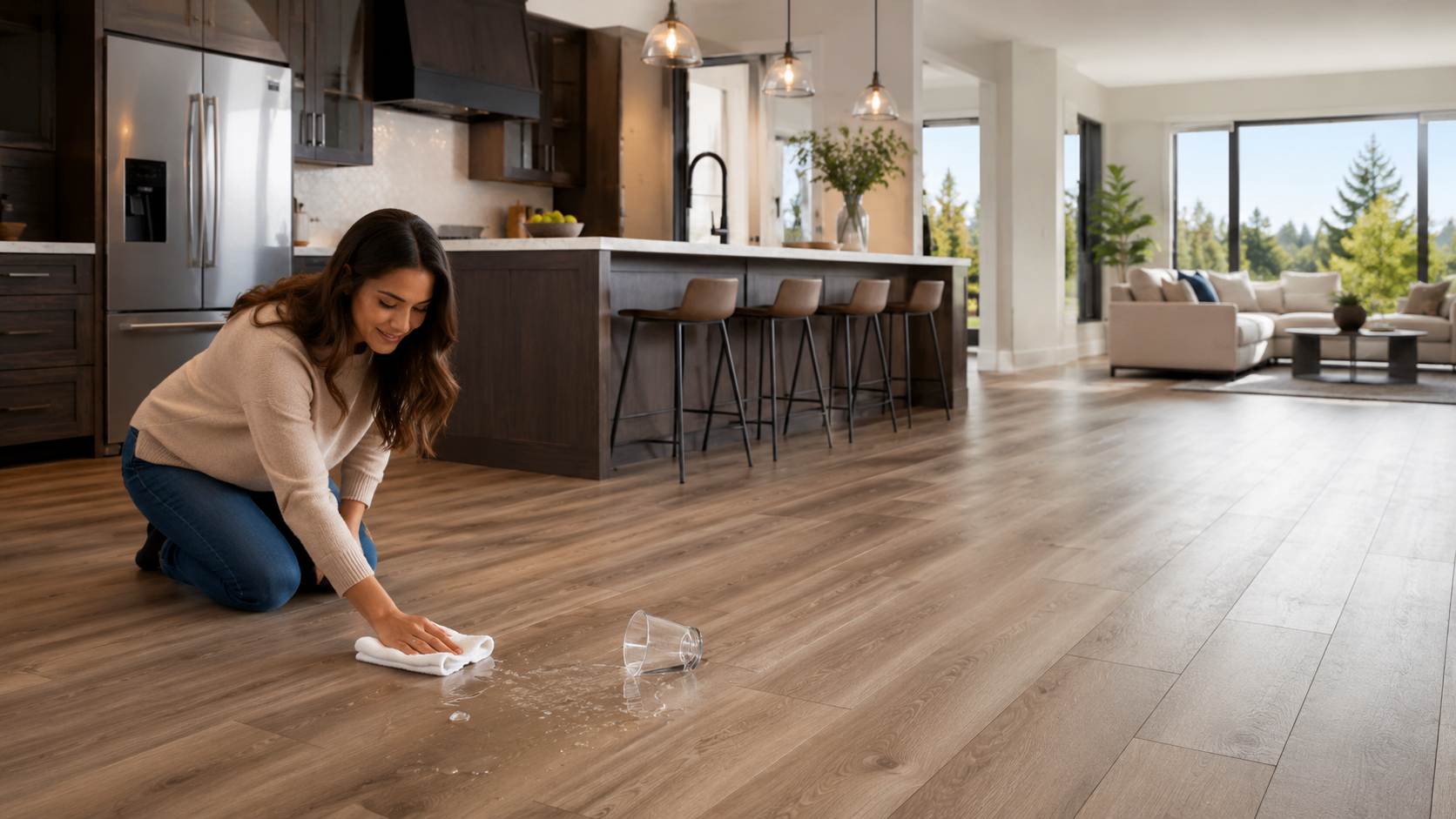
Truly waterproof flooring means the material's core does not absorb moisture regardless of how long liquid sits on the surface or seeps into seams. Only LVP (luxury vinyl plank) and porcelain or ceramic tile meet this standard. Products marketed as 'waterproof laminate' protect against surface spills that are cleaned quickly but have an HDF core that can still swell when moisture penetrates the seams. Engineered hardwood is water-resistant, meaning it tolerates brief moisture exposure, but sustained moisture will damage it. Understanding this distinction before choosing flooring for kitchens, bathrooms, or pet households prevents expensive mistakes.
The word 'waterproof' is used loosely in the flooring industry, and that creates real problems for homeowners who make flooring decisions based on marketing claims rather than material science. We have seen the results in Sacramento homes: warped laminate in kitchens, swollen engineered hardwood near bathroom doorways, and pet-damaged floors that were supposed to be protected but were not.
At On Point Flooring, we think clarity on this topic is more important than selling a specific product. This guide draws a hard line between what is actually waterproof and what is water-resistant, breaks down the best options by room type, and gives you honest guidance on budget waterproof flooring that does not look like a compromise.
Truly Waterproof vs Water-Resistant: The Difference Matters
Waterproof means that moisture cannot damage the material's core, regardless of how long it is exposed. A truly waterproof floor can have water sit on it for an extended period, seep into the seams between planks or tiles, and still not experience structural damage like swelling, warping, or delamination.
Water-resistant means the material can handle brief moisture exposure on the surface without damage, provided it is wiped up in a reasonable time. Water-resistant flooring is not safe for bathrooms, for installation in basements below grade, for homes with pets that have accidents, or for any area where water sits for extended periods.
The confusion arises because many flooring products are marketed with claims that blur this line. Here is the simple test: does the product's core absorb water? If the core is HDF, MDF, or wood-based, it absorbs moisture. Full waterproof protection requires a vinyl or stone-based core that does not absorb at all. Always ask about the core material, not just the surface.
Best Waterproof Flooring Options Compared
Luxury Vinyl Plank (LVP) -- 100% Waterproof
LVP has become the dominant waterproof flooring choice in Sacramento homes for good reason. The material is made from layers of PVC vinyl, with no wood-based core component. Because there is no wood in the construction, there is nothing to absorb moisture. LVP can literally be submerged in water without the plank itself being damaged, which is a level of waterproof performance that no laminate or wood-based product can match.
In practical terms, this means LVP handles dog accidents, bathroom splashes, kitchen spills, and Sacramento's occasional flooding events (for homes with basements or ground-level installations) without warping, swelling, or absorbing odors. The surface cleans completely with water and pet-safe cleaners. It installs in bathrooms, kitchens, laundry rooms, and basements without special treatment.
The only vulnerability LVP has is the joints between planks. Standing water that seeps consistently between the seams over time can reach the subfloor beneath, even though the plank itself is unaffected. In very high-moisture areas like shower floors or rooms that flood regularly, using a floating LVP installation with sealed seams or switching to tile is the right call.
Porcelain and Ceramic Tile -- Waterproof with Caveats
Fired porcelain and ceramic tile are genuinely waterproof at the tile surface level. The material absorbs essentially no moisture. However, the caveat that matters for installation quality is the grout. Grout is the jointing material between tiles, and grout that is not properly sealed or that develops cracks over time can allow moisture to penetrate to the subfloor beneath. Epoxy grout and properly sealed cementitious grout provide excellent protection, but grout maintenance is a reality of tile ownership.
Porcelain is denser and more moisture-resistant than ceramic and is the appropriate choice for bathrooms, kitchens, and any area with consistent moisture exposure. Ceramic tile is generally fine for bathrooms and kitchens with normal use. Both require a properly waterproofed substrate in wet applications like showers and around bathtubs, which is separate from the tile surface waterproofing.
Waterproof Laminate -- Not the Same as Waterproof
This is the category that generates the most confusion and the most flooring replacement calls we receive. Waterproof laminate is a real product category, and the marketing claims are real, but what they mean requires careful reading. The surface layer of waterproof laminate is sealed against surface spills. If you spill a glass of water on waterproof laminate and wipe it up within a few minutes, no damage occurs.
What waterproof laminate cannot do is protect against moisture that penetrates the seams between planks and reaches the HDF core. HDF is a compressed wood fiber product that swells when it absorbs moisture. Once a plank's core is wet enough to swell, the damage is visible and permanent. In bathrooms, kitchens, laundry rooms, or any area with pet accidents that sit before cleanup, waterproof laminate is not an appropriate choice. We are straightforward about this because discovering it after installation is an expensive lesson.
Sheet Vinyl -- Budget Waterproof Option
Sheet vinyl is one of the most underappreciated waterproof flooring options available. Because it installs as a continuous sheet without seams (or with very few seams in large rooms), there are no joints for moisture to penetrate. The surface and core are fully vinyl, which means the same waterproof performance as LVP without the seam vulnerability.
Sheet vinyl fell out of fashion in the era of cheap laminate, but modern sheet vinyl has improved significantly. It is available in realistic wood and stone visuals, installs flat and smooth, and costs less than most LVP products. The main practical limitations are that it is difficult to repair a damaged section without visible patching, and installation requires a very flat subfloor to look its best. For budget-conscious homeowners who need waterproof performance in a rental property, laundry room, or bathroom, sheet vinyl is a practical option that delivers genuine value.
Engineered Hardwood -- Water-Resistant, Not Waterproof
Engineered hardwood handles the kind of moisture that a real home generates better than solid hardwood, but it is not waterproof in any meaningful sense. The multi-layer construction is more stable than solid wood, meaning it does not expand and contract as dramatically with humidity changes. But the wood veneer surface can stain from water, and sustained moisture exposure causes the core to swell and the veneer to bubble or delaminate.
In Sacramento, engineered hardwood is a practical choice for living areas, bedrooms, and hallways where the moisture exposure is normal household humidity rather than liquid water. It is not appropriate for bathrooms, laundry rooms, or any area with regular liquid exposure. For kitchens, the appropriateness depends on the homeowner's habits -- an engineered hardwood kitchen can perform beautifully if spills are cleaned promptly and the floor is never mopped wet.
Waterproof Bathroom Flooring Options
Bathrooms are the highest-moisture room in any home. Standing water, steam, humidity cycles, and the occasional overflow make bathroom flooring the most demanding application for moisture performance. The appropriate choices for Sacramento bathrooms are:
- Porcelain tile: The traditional gold standard for bathroom flooring. Non-porous, durable, available in every possible style and size, and fully appropriate for shower floors with the right substrate preparation.
- LVP with 12+ mil wear layer: An excellent modern bathroom flooring choice. Waterproof, comfortable underfoot (warmer than tile), and easy to install. Not appropriate for shower interiors, but ideal for bathroom floors outside the shower zone.
- Sheet vinyl: A budget-appropriate option that provides genuine waterproof performance in a bathroom without the grout maintenance of tile.
What to avoid in bathrooms: laminate of any kind, solid hardwood, and low-quality vinyl products with thin cores that may bubble from the steam and humidity cycling of a bathroom environment.
Waterproof Kitchen Flooring: What Works Best
Kitchen flooring faces a different set of moisture challenges than bathrooms. Heavy liquid spills, cooking steam, and the constant foot traffic combined with dropped food and liquid make kitchen flooring a durability test as much as a waterproof test.
LVP is currently the most popular kitchen flooring choice in Sacramento homes we install for, and the reasons are practical: it is waterproof, comfortable to stand on for long periods (meaningfully more comfortable than tile), easy to clean, and available in wood-look styles that bridge naturally into adjacent living areas. In open-plan Sacramento homes with combined kitchen and living spaces, LVP is the easiest choice to run continuously through both zones.
Porcelain tile remains the most durable choice for kitchens that receive very heavy use. The surface is scratch-resistant against dropped utensils and heavy pots, and it can handle any cleaning chemical. The trade-off is comfort during long cooking sessions and the grout maintenance requirement.
Engineered hardwood in kitchens works well for homeowners who manage spills promptly and want the warmth and aesthetic of wood throughout the main floor of their home. It is a realistic choice in a Sacramento kitchen that does not have a dishwasher leak history or flooding risks.
Waterproof Flooring for Pet Households
Pet households need waterproof flooring, and the bar for what counts as waterproof is higher than in rooms without animals. Animals are honest stress tests for flooring: they create moisture at unexpected times, in unexpected places, and often the moisture sits before anyone notices it.
For Sacramento homeowners with dogs, cats, or any pet that might have an accident, the recommendation is straightforward: LVP with a 12 mil or higher wear layer as the primary living floor, and tile in bathrooms and laundry rooms. The combination covers every realistic moisture scenario a pet household encounters.
One detail that matters for pet households specifically: the installation method. Floating LVP installations without edge sealing are technically waterproof at the plank level, but liquid that seeps between seams can reach the subfloor. In rooms where accidents are most likely, we recommend using a full-spread adhesive installation or sealing the seams during a floating installation to prevent any moisture from reaching the subfloor and causing subfloor damage or persistent odor even after the floor surface is clean.
Cheap Waterproof Flooring Options That Don't Look Cheap
Not every waterproof flooring project has to be a premium investment. Here are the best options for Sacramento homeowners who need genuine waterproof performance at a budget-friendly price:
- Sheet vinyl: Starting around $1 to $2 per square foot for the material plus installation, sheet vinyl delivers true waterproof performance at the lowest cost of any flooring category. Modern designs have improved dramatically. For a rental bathroom or a laundry room, it is the most practical budget choice.
- Entry-level LVP (6-8 mil wear layer): Budget LVP products run $2 to $4 per square foot for material and deliver the same waterproof core as premium products. The trade-off is thinner wear layer and less scratch resistance, which matters more in pet households and high-traffic areas than in guest rooms or lower-use spaces.
- Ceramic tile (standard grade): Standard ceramic tile starts around $1 to $3 per square foot for material and is a legitimate waterproof option for bathrooms and kitchens. The installation labor cost is the primary expense, but the material itself is genuinely affordable.
Our recommendation: do not cut corners on waterproof performance in rooms where moisture is a real condition. The $200 you save on a cheaper product that fails in a wet environment becomes a much larger expense when the floor needs to be replaced in three years. Spend the budget on the room that needs it and save on rooms that do not.
Frequently Asked Questions
Q: What is the most waterproof flooring for a bathroom?
A: Porcelain tile and LVP are the two most appropriate waterproof flooring choices for Sacramento bathrooms. Porcelain is the most durable and handles full shower applications with the right substrate. LVP is warmer underfoot and more comfortable in bathroom areas outside the shower, making it increasingly popular for bathroom floors in Sacramento remodels. Both provide genuine waterproof protection that laminate and engineered hardwood do not.
Q: Is waterproof laminate actually waterproof?
A: Waterproof laminate protects against surface spills that are cleaned up quickly, but it is not waterproof in the way LVP or tile is. The HDF core in laminate absorbs moisture when liquid penetrates the seams between planks, causing swelling and permanent damage. We do not recommend waterproof laminate for bathrooms, kitchens, pet households, or any area with regular liquid exposure.
Q: How long does waterproof LVP flooring last?
A: Quality LVP with a 12 mil or higher wear layer typically lasts 20 to 30 years in residential applications with normal maintenance. In Sacramento pet households with heavy use, budget toward the lower end of that range. The waterproof core of LVP does not degrade with moisture exposure, but the surface wear layer does thin over years of foot traffic and scratch accumulation.
Q: Can you install LVP in bathrooms and kitchens?
A: Yes, LVP is appropriate for both bathrooms and kitchens in Sacramento homes. It is 100% waterproof, comfortable underfoot, easy to clean, and available in wood and stone looks that work beautifully in both rooms. The only bathroom application where LVP is not appropriate is the shower interior, which should always be tiled. For everything outside the shower, LVP is an excellent choice.
See Waterproof Flooring Samples in Your Home -- Free Consultation
One of the most valuable parts of choosing waterproof flooring is seeing how the product actually looks in your space. LVP that looks warm and natural in a showroom can look different in the lighting conditions of your bathroom or kitchen. At On Point Flooring, we bring samples to your Sacramento home so you make your decision in your actual environment.
Our free in-home consultations cover material recommendations for every room, honest cost estimates, and answers to every question about what will actually work in your specific home conditions.