How to Remove Thinset From Concrete
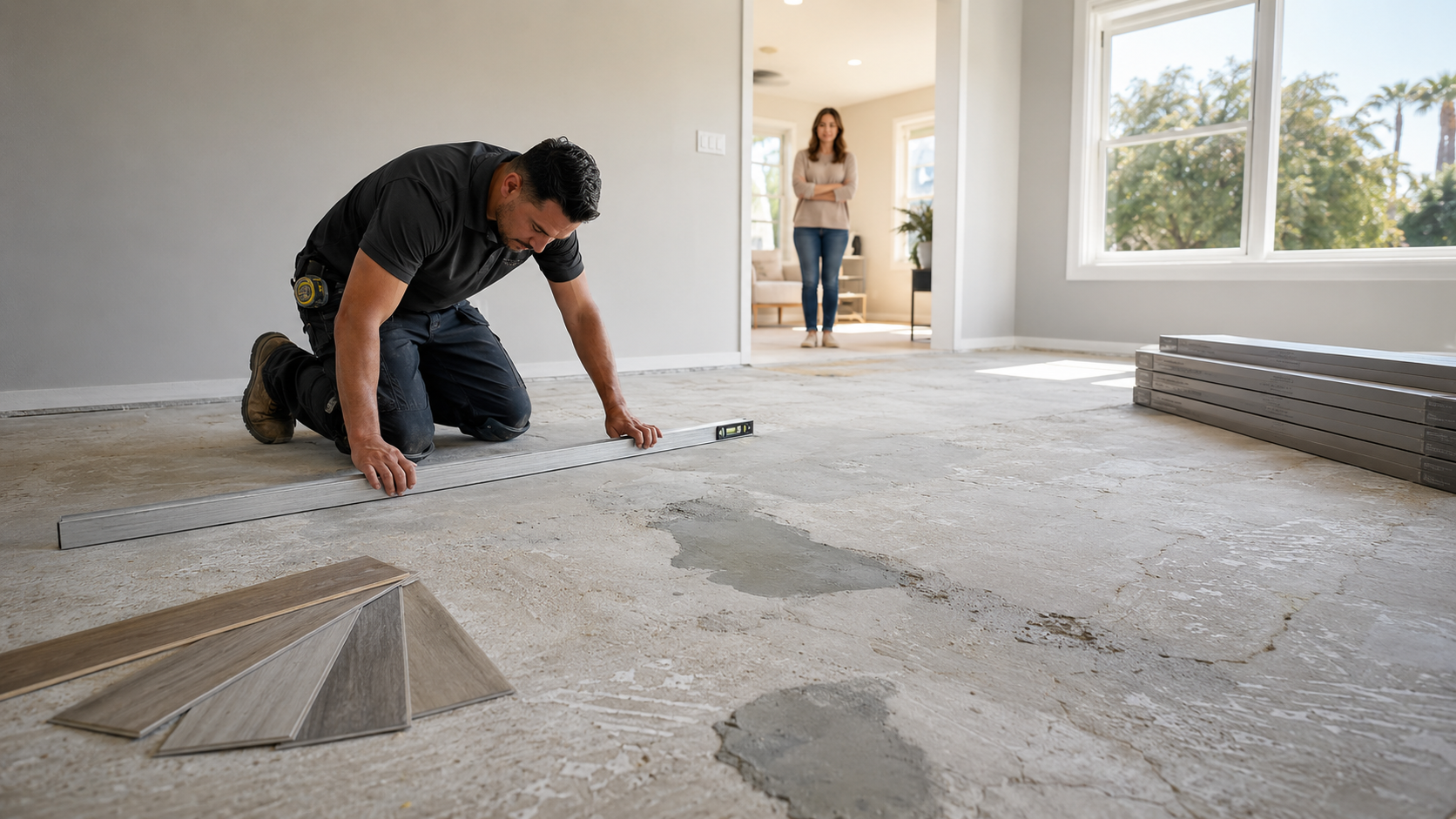
When tile comes up, thinset stays behind. It's the gray cement that held the tile to the slab, and it usually sits in hard ridges and lumps. If it stays, your new floor pays for it.
Why Thinset Has to Come Off
- LVP and laminate will click, flex and separate over ridges.
- New tile can rock and crack if it's set over old high spots.
- Glue down hardwood won't bond evenly.
Most flooring makers spell out how flat the slab has to be. Leftover thinset is the number one reason a slab fails that check.
How Pros Remove Thinset
Ride on and walk behind scrapers knock down a lot of it fast on big open rooms.
Concrete grinders do the finishing work. Diamond tooling takes the thinset down to clean concrete and leaves it flat. This is the step most quotes skip.
Demo hammers with chisel bits work on thick mortar beds and edges, but they're slow on big areas and can gouge the slab if you're not careful.
The Dust Problem
Grinding thinset makes very fine dust. Without a HEPA vacuum connected to the grinder, it ends up everywhere. Ask any company how they handle it. Our crews run HEPA dust capture at the tool.
Can You Do It Yourself?
For a small bathroom, a rental grinder and a lot of patience can work. For a whole house, it's a brutal job. The rental equipment is heavy, the dust is real and it's easy to leave low spots.
What "Install Ready" Looks Like
- No thinset ridges or lumps
- High spots ground down
- Cracks and low spots patched
- Slab swept and clean
That's what we hand over with our thinset and glue removal service. If the tile is still down, we'll handle the dustless tile removal and the thinset in the same visit.
Wondering about cost? Start with our tile removal cost guide.
Get your thinset removal price or call (916) 542-3333. We price every job in your home, and the price we quote is the price you pay.