
How Long Does Floor Removal Take? A Timeline by Flooring Type
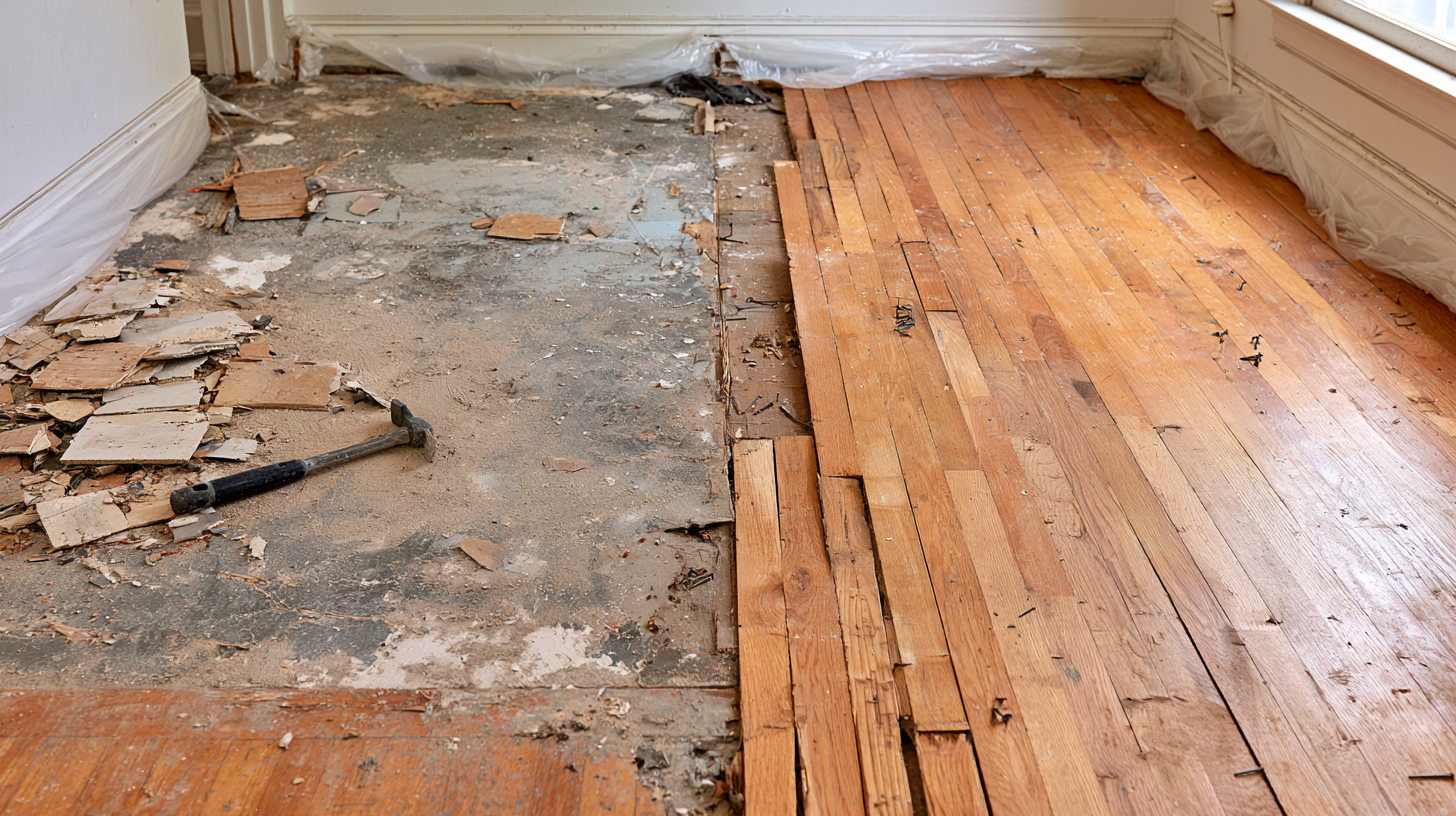
When you are planning new floors, removal day can feel like the unpredictable part. Will the old flooring come out in a few hours, or will demolition take several days?
The honest answer depends on the material, how it was installed, the size and layout of the space, and what the crew finds underneath. A professional assessment is the best way to set a realistic schedule, but understanding the main variables can help you plan.
What Determines a Floor Removal Timeline?
Square footage matters, but it is only one part of the schedule. Two homes with the same floor area can require very different amounts of work.
A contractor will also consider:
- The existing flooring material and installation method.
- The number of flooring layers.
- The strength and type of adhesive or mortar.
- Room access, stairs, hallways, and occupied areas.
- Built-ins, appliances, toilets, and baseboards.
- Dust-control and debris-removal requirements.
- The condition the slab or subfloor must reach afterward.
A fast tear-out is not useful if adhesive, staples, or mortar remain and prevent the next floor from being installed correctly.
How Long Does Carpet Removal Take?
Carpet is generally one of the faster materials to remove. The carpet is cut into manageable sections, followed by the padding, tack strips, staples, and remaining debris.
Large open rooms usually move faster than stairs, small closets, or areas filled with furniture. Glue-down commercial carpet also takes more time than residential stretch-in carpet because the adhesive must be addressed.
The final schedule should include cleanup and surface inspection—not just rolling up the carpet.
How Long Does Floating LVP or Laminate Removal Take?
Floating plank floors are not normally attached directly to the substrate. Once transitions and trim-related obstacles are addressed, the planks can often be unlocked and removed in sections.
The work may slow down when flooring runs continuously through many rooms, beneath fixed elements, or over an underlayment that is damaged or difficult to remove. Multiple layers or unexpected moisture can also extend preparation time.
How Long Does Hardwood Removal Take?
Hardwood removal depends heavily on how the boards are secured. Nail-down and staple-down floors require the crew to separate the boards and remove remaining fasteners. Glue-down hardwood is more labor-intensive because the boards and adhesive are strongly bonded to the surface below.
Plank thickness, wood species, installation direction, room shape, and access all affect production. Glue-down hardwood may also require mechanical adhesive removal after the visible boards are gone.
How Long Does Tile Removal Take?
Tile removal often takes longer than carpet or floating plank because the system includes tile, grout, and mortar or thinset. Breaking and lifting the tile is only part of the job. The remaining material must be removed or reduced until the surface is suitable for the next installation.
Large open rooms may allow efficient use of ride-on removal equipment. Tight bathrooms, stairs, showers, cabinets, and narrow access points require more detailed work.
Dust control and debris handling also matter. Tile and mortar are heavy, and rushing the haul-out can damage walls, doors, or exterior paths.
Why Glue-Down Floors Take Longer
Glue-down vinyl, hardwood, carpet, and other bonded materials can vary widely. Some adhesives release cleanly; others remain firmly attached after the flooring is removed.
The crew may need to scrape, grind, or mechanically remove residue. Older or unfamiliar materials should be evaluated before disturbance, since specialized testing or handling may be appropriate.
This is why a contractor cannot responsibly estimate time from square footage alone.
What Can Extend the Schedule?
Several conditions can add time after demolition begins:
- Several flooring layers are discovered.
- Adhesive or mortar is harder than expected.
- The slab has cracks, high spots, or low areas.
- Wood panels are loose, wet, or damaged.
- Appliances or fixtures require additional coordination.
- Limited access slows equipment and debris movement.
- The replacement floor needs more extensive preparation.
A good project schedule leaves room to evaluate these conditions instead of covering them immediately.
How Can Homeowners Help the Project Move Faster?
Before work begins, clear movable belongings and confirm who is responsible for furniture, appliances, plumbing fixtures, and baseboards. Provide a clear path between the work area and the debris-loading location.
Keep children and pets outside the work zone, and discuss parking, gates, elevators, occupied rooms, and community restrictions ahead of time.
Most importantly, tell the contractor what flooring will be installed next. The required end condition for tile may differ from the preparation needed for floating LVP or glue-down hardwood.
Get a Timeline Based on Your Actual Floor
Online timelines can provide context, but they cannot show how strongly your floor is bonded or what condition is hidden underneath.
OP Remodel provides Floor Removal Services for tile, hardwood, carpet, vinyl, and glue-down flooring across Sacramento, Placer, and El Dorado counties. The team can also coordinate Flooring Installation Services after demolition and preparation. Book a Free Flooring Assessment for a project-specific scope and timeline.