
How Do You Know If Your Subfloor Needs Repair or Leveling?
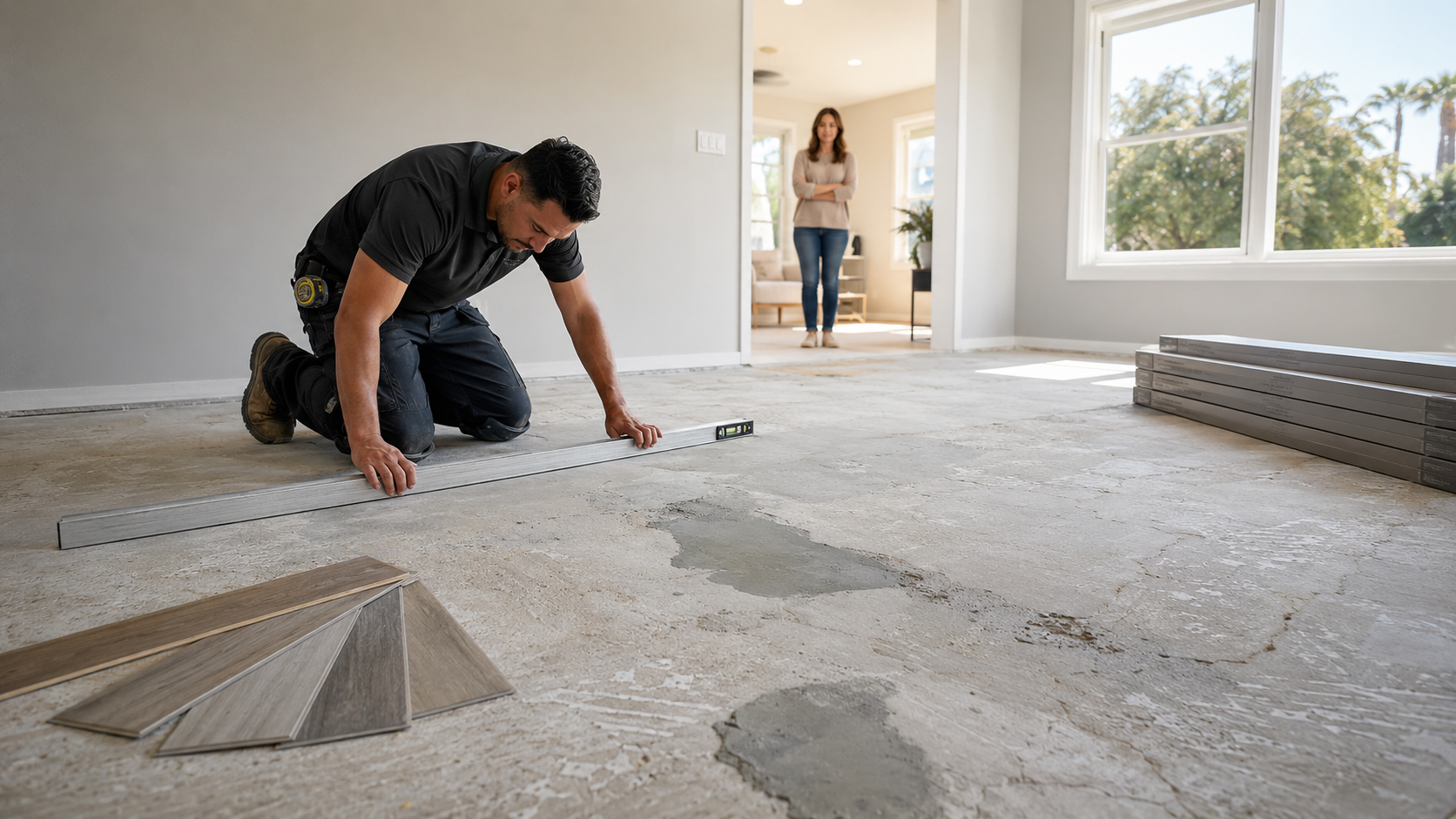
A beautiful new floor can still fail if the surface underneath it is unstable, damaged, or uneven. Planks may separate, tile can crack, and some areas may feel hollow or flexible underfoot.
The tricky part is that subfloor problems are often hidden until the old flooring comes out. An experienced installer evaluates the exposed surface before installation and determines whether it needs cleaning, patching, leveling, repair, or a combination of those steps.
Here are the warning signs homeowners should know.
What Is the Difference Between a Subfloor and a Slab?
In a wood-framed home, the subfloor is usually a structural panel layer attached to the floor joists. It supports the underlayment and finished flooring above it.
Many Sacramento-area homes also have concrete slab foundations. Although a slab is technically different from a wood subfloor, homeowners often use “subfloor” to describe any surface that supports the new flooring.
Both surfaces must be sound, clean, dry, and sufficiently flat for the selected material. Their repair methods, however, are different.
Sign 1: The Floor Feels Soft or Spongy
A soft area under carpet, vinyl, or plank flooring can indicate damaged wood, loose panels, moisture exposure, or inadequate support. The floor may flex or feel slightly lower when you step on it.
This condition should be investigated rather than covered. Installing a rigid finish over a weak section can lead to movement, broken locking joints, cracked grout, or a noticeable dip.
The repair may involve replacing a damaged section, securing loose panels, or addressing the framing or moisture source below.
Sign 2: You Notice Dips, Ridges, or Sloping Areas
A floor does not have to be perfectly level in every home, but it generally needs to be flat within the flooring manufacturer’s tolerance. Level describes the relationship to gravity; flat describes whether the surface has disruptive high and low spots.
Long dips, abrupt ridges, raised seams, and uneven transitions can prevent new flooring from sitting correctly. Floating planks may flex or click, while tile can develop lippage or cracking.
A contractor may check the surface with a long straightedge or other measuring tools to identify where preparation is required.
Sign 3: The Floor Squeaks or Moves
Squeaks are often caused by movement between wood panels, fasteners, joists, or flooring layers. Not every squeak signals serious structural damage, but movement should be evaluated before it is hidden beneath a new floor.
Loose subfloor panels may be refastened when the structure is otherwise sound. Damaged panels or framing concerns require a more involved repair. The cause matters more than simply silencing the noise.
Sign 4: Cracks Are Visible in the Concrete
Small concrete cracks are common, but their width, pattern, movement, and elevation should be considered before installation. A crack with vertical displacement or signs of continued movement deserves closer attention.
Depending on the flooring material and slab condition, preparation may involve cleaning, patching, grinding, or an appropriate crack-isolation system. Covering an active or uneven crack without proper treatment can allow problems to show through the new floor.
Sign 5: There Are Moisture Stains or Musty Odors
Dark staining, swollen wood, musty smells, lifting adhesive, and repeated flooring damage can point to moisture. The source may be a plumbing leak, exterior drainage problem, slab moisture, or an earlier incident that was never fully dried.
New flooring should not be installed until the source is understood and the substrate meets the material’s moisture requirements. Covering a damp surface can trap the problem and damage flooring, adhesive, or underlayment.
Testing and repair recommendations depend on the substrate and the flooring product being installed.
Sign 6: Old Adhesive, Mortar, or Flooring Layers Remain
After removal, the surface may still have glue, thinset, mortar ridges, staples, underlayment, or fragments of the previous floor. These remnants can create high spots, interfere with bonding, or prevent floating planks from moving as designed.
Surface preparation may include scraping, grinding, mechanical removal, or patching. The goal is not always to make the surface look new; it is to make it suitable for the next installation.
What Does Subfloor Leveling Involve?
Leveling is a general term for correcting low areas, ridges, seams, and surface irregularities. The method depends on the substrate, the size of the affected area, and the flooring manufacturer’s requirements.
Concrete preparation may include grinding high spots and filling low areas with an approved patching or leveling product. Wood subfloors may require sanding raised seams, securing panels, replacing damaged sections, or installing an appropriate underlayment.
Leveling products cannot solve every issue. Structural movement, active moisture, severely damaged panels, or major slab displacement must be addressed at the source.
Does Every Uneven Floor Need Major Repair?
No. Some floors only need localized preparation after removal. A few adhesive ridges, minor panel seams, or isolated low areas may be correctable without rebuilding the entire surface.
Other conditions are more involved:
- Widespread soft or deteriorated wood.
- Continuing moisture intrusion.
- Large areas of movement or deflection.
- Cracks with vertical displacement.
- Significant differences between connected rooms.
- Damage around plumbing fixtures or exterior doors.
The value of an inspection is learning which situation you have before the new flooring is ordered or installed.
Why the New Flooring Type Matters
Different materials respond differently to the surface beneath them. Floating LVP and laminate need a flat base so locking joints are not repeatedly stressed. Tile needs a stable substrate because movement can crack tile or grout. Glue-down flooring requires a clean, properly prepared surface for reliable adhesion.
The product instructions should guide the preparation standard. A surface that was acceptable for carpet may not be suitable for large-format tile, hardwood, or rigid-core plank without additional work.
Inspect the Surface After Floor Removal
The best time to evaluate the substrate is after the old flooring and remaining adhesive or underlayment have been removed. That gives the contractor a clear view of the entire area instead of relying on clues visible from above.
OP Remodel’s Floor Removal Services include debris haul-off, adhesive removal, and concrete preparation, helping create a clean starting point for the next phase. The team also provides Flooring Installation Services for homeowners who want one contractor coordinating removal, preparation, and installation.
If your floor has soft spots, cracks, moisture signs, or uneven areas, Book a Free Flooring Assessment to discuss what is visible now and what may need to be evaluated after removal.