
Glue-Down Flooring Removal: Why the Adhesive Is Often the Hardest Part
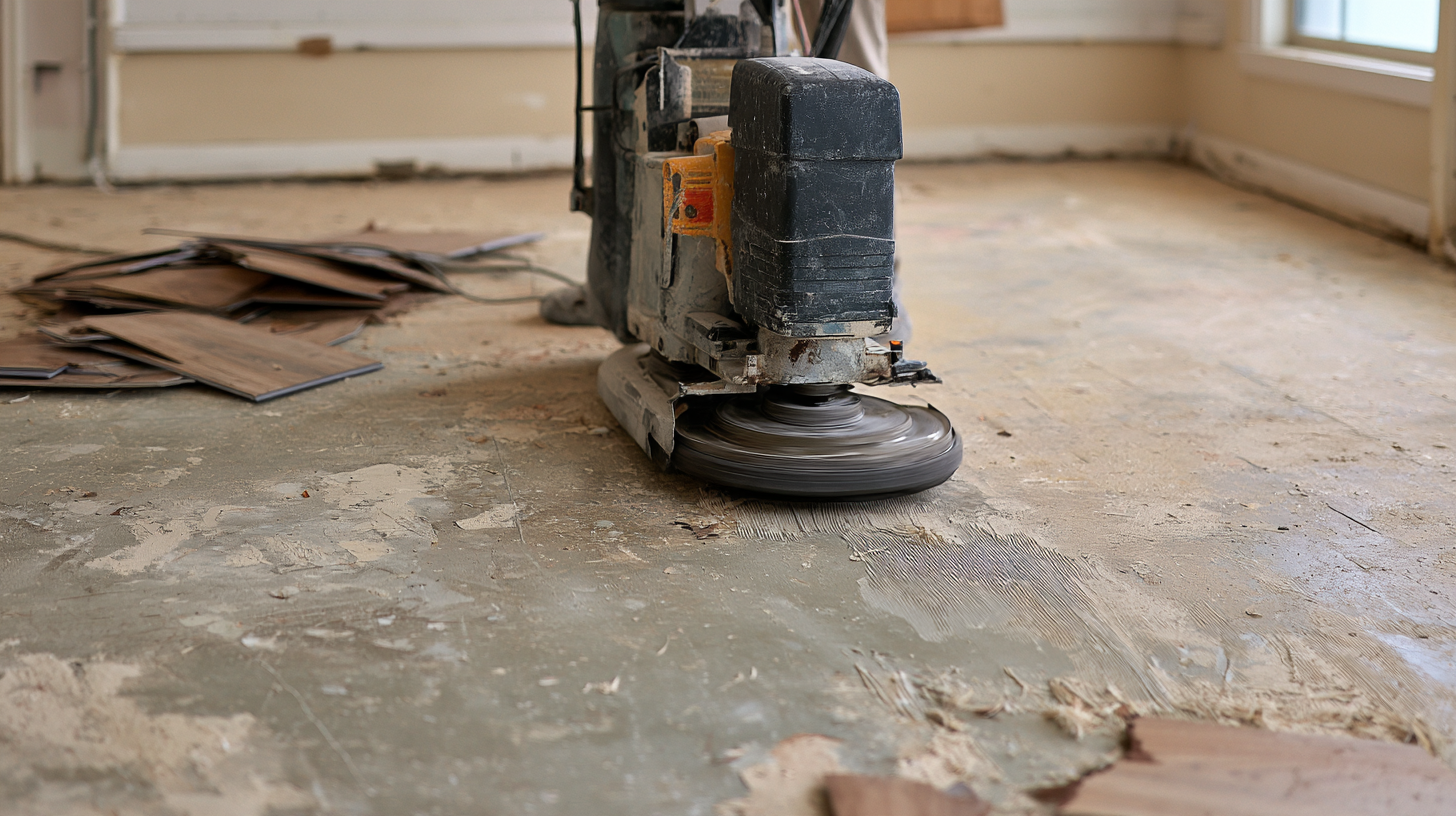
Glue-down flooring is designed not to move. That is a benefit while the floor is in service, but it creates a different challenge when the material needs to come out.
Removing the visible boards, planks, or carpet may be only the first half of the project. The remaining adhesive can determine how long removal takes, what equipment is needed, and how much preparation the surface requires before a new floor can be installed.
Which Floors May Be Glued Down?
Several flooring systems can be bonded directly to a concrete slab or approved wood substrate, including:
- Engineered hardwood.
- Luxury vinyl plank or vinyl tile.
- Sheet vinyl.
- Commercial carpet and carpet tile.
- Rubber or specialty flooring.
- Underlayment used beneath another finished surface.
The adhesive type, age, thickness, spread pattern, substrate, and installation conditions all affect how difficult the material is to remove.
Why Does the Flooring Release but the Glue Stays?
Flooring and adhesive do not always separate at the same point. A plank may split, peel, or break away while leaving glue on the slab. In other areas, the flooring may remain tightly bonded and come up only in small pieces.
Some adhesive remains flexible, while other products become hard or brittle. Heat, moisture, prior repairs, and the porosity of the substrate can create different conditions within the same room.
That inconsistency is why glue-down removal is difficult to estimate from photographs alone.
How Is Glue-Down Flooring Removed?
The crew first evaluates the flooring, bonding method, access, and underlying surface. Professional removal equipment may then be used to shear or lift the flooring away from the substrate.
Large, open spaces may allow ride-on demolition equipment. Edges, closets, stairs, bathrooms, and areas around fixed built-ins usually require smaller tools and more detailed work.
After the flooring is removed, the remaining adhesive may be scraped, mechanically reduced, or ground as appropriate for the substrate and replacement product. The goal is not automatically to make the slab look brand new. It is to create the condition required for the next installation.
Why the Replacement Floor Matters
Different flooring systems have different preparation requirements.
Floating LVP needs a sufficiently flat, stable surface so the locking joints are not repeatedly stressed. New glue-down flooring needs a clean substrate that is compatible with the selected adhesive. Tile requires a sound base without disruptive residue or high spots. Hardwood installation may require moisture testing, leveling, and a method approved for the slab.
The removal crew should know what comes next. Otherwise, the surface may be cleaned to the wrong standard or require a second round of preparation.
Can Adhesive Damage the Concrete During Removal?
Aggressive tools can gouge or chip concrete when they are used carelessly. At the same time, leaving thick adhesive ridges may make the substrate unsuitable for the new floor.
Professional removal balances production with control. Equipment, blades, grinding methods, and operator technique should match the material and slab condition.
Some patching may still be needed after removal, especially where the original slab already had cracks, low areas, repairs, or surface weakness.
What About Old or Unfamiliar Adhesive?
Older flooring systems and adhesives deserve caution. Their age or appearance alone cannot identify what they contain.
If the material is unfamiliar or may require specialized testing or handling, work should pause until the appropriate evaluation is completed. Homeowners should avoid sanding, grinding, or breaking questionable materials on their own. Our asbestos floor tile guide explains the warning signs.
A contractor can explain what is known, what is uncertain, and whether another qualified professional should be involved before demolition continues.
What Can Make Glue-Down Removal Take Longer?
Common schedule factors include:
- A very strong or thick adhesive layer.
- Several flooring or underlayment layers.
- A floor that breaks into small pieces.
- Limited access for larger equipment.
- Multiple small rooms, corners, or built-ins.
- Extensive grinding or concrete preparation.
- Slab cracks, moisture signs, or uneven areas discovered afterward.
These conditions do not necessarily mean something went wrong. They are part of exposing and preparing a surface that has been covered for years.
What Should Be Included in the Scope?
Before hiring a contractor, confirm whether the proposal includes:
- Removal of the finished flooring.
- Removal or reduction of remaining adhesive.
- Debris collection and haul-off.
- Dust-control and containment measures.
- Slab or subfloor inspection.
- Concrete preparation or a clear description of excluded work.
- Coordination with the new flooring installation.
“Floor removal” can mean a basic tear-out or a complete installation-ready service. The written scope should make that distinction clear.
Start With the Floor That Is Actually in Your Home
Glue-down removal is not a one-method job. The right plan depends on the material, bond, substrate, access, and replacement floor.
On Point Flooring’s Floor Removal Services cover glue-down hardwood, vinyl, carpet, tile, adhesive removal, debris haul-off, and concrete preparation. For the adhesive itself, see our thinset and glue removal service. Get your floor removal price for an on-site evaluation and written scope.
Old floor coming out? We price it in your home, and that's the price you pay.
Get your floor removal price.
We come to you across Sacramento, Placer and El Dorado counties. Rather talk it through? Call (916) 542-3333. We get back to you within one business day.
Sacramento County
Sacramento, Elk Grove, Folsom, Rancho Cordova, Citrus Heights
Placer County
Roseville, Rocklin, Lincoln, Loomis, Granite Bay, Auburn
El Dorado County
El Dorado Hills, Cameron Park, Placerville, Shingle Springs