
Engineered vs. Solid Hardwood: Which Performs Better in Sacramento Homes?
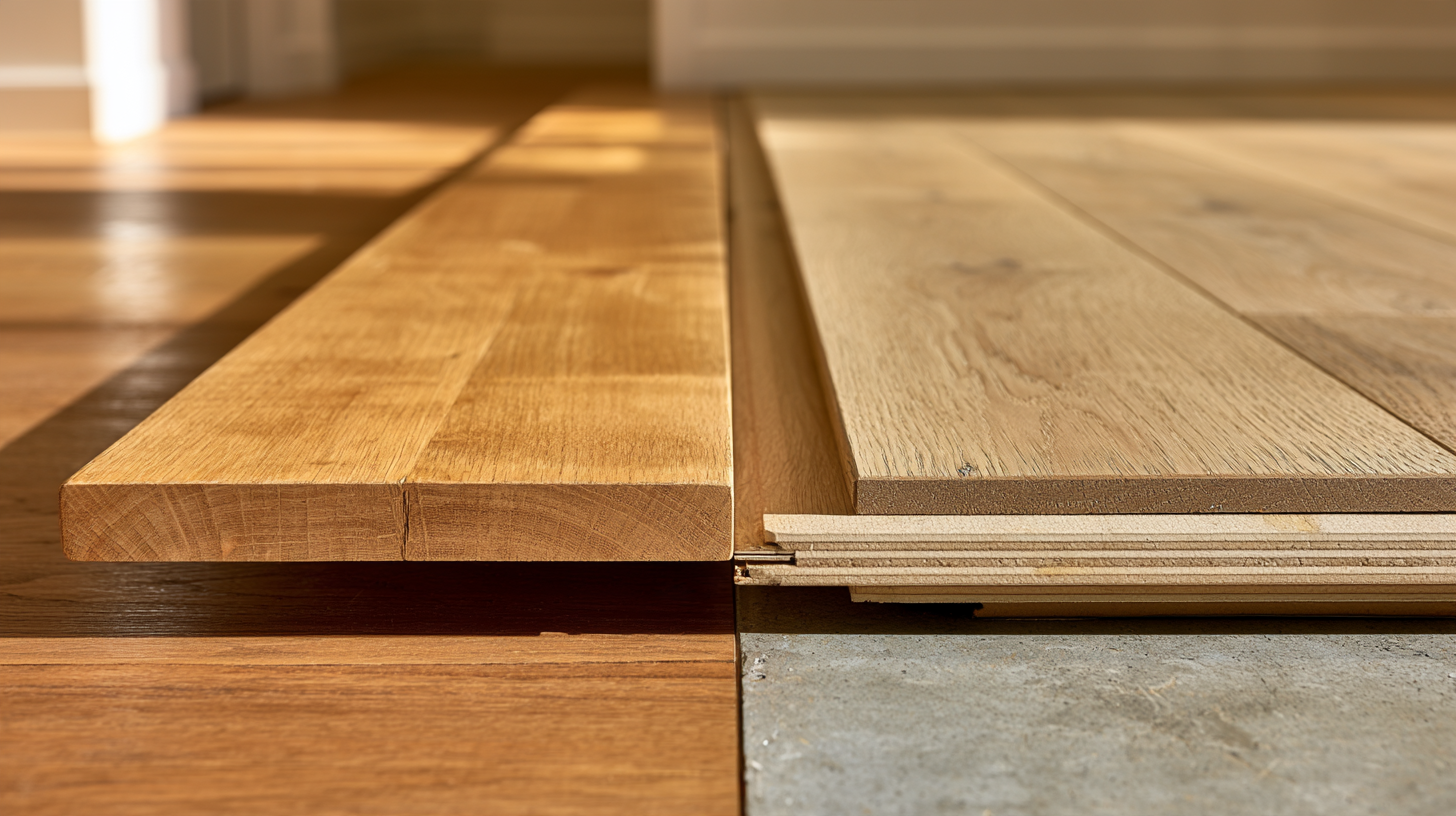
Real wood flooring brings warmth and character that manufactured visuals try to imitate. Once you decide on hardwood, however, another choice appears: solid or engineered?
Both are genuine wood floors. The difference is how they are built, how they respond to environmental changes, and where they can be installed. For Sacramento homeowners, the substrate, room conditions, and maintenance expectations matter as much as appearance.
What Is Solid Hardwood?
Solid hardwood planks are milled from a single piece of wood. They are available in many species, widths, grades, stains, and surface textures.
Because the wear layer is substantial, many solid floors can be sanded and refinished more than once. That makes solid hardwood appealing to homeowners who want a floor that can evolve over decades.
The trade-off is movement. Wood naturally expands and contracts as environmental conditions change. Proper acclimation, installation gaps, indoor climate control, and the correct fastening method all matter.
What Is Engineered Hardwood?
Engineered hardwood has a real wood veneer over a layered core. The cross-layered construction improves dimensional stability compared with a solid plank.
It still looks and feels like wood because the visible surface is wood. Quality varies, though. Veneer thickness, core construction, finish, milling, and manufacturer specifications affect durability and whether the floor can be refinished later.
Engineered hardwood is commonly considered for concrete slabs and areas where seasonal movement is a concern.
How Does Sacramento’s Climate Affect Hardwood?
Sacramento’s dry summers can reduce indoor humidity, causing wood to contract. Gaps may become more noticeable when conditions are very dry. Seasonal temperature changes and cooling systems can also affect the indoor environment.
Solid hardwood generally responds more noticeably to these swings. Engineered construction helps reduce movement, although it does not eliminate the need for acclimation and climate control.
The home matters too. A consistently conditioned interior behaves differently from a property that sits vacant or experiences large temperature changes.
Which Is Better Over a Concrete Slab?
Engineered hardwood is often the more practical option over concrete because compatible products can be glued or floated over a properly prepared slab.
Before installation, the slab should be evaluated for moisture, flatness, cleanliness, cracks, and remaining adhesive. The flooring and adhesive manufacturers’ instructions determine the acceptable conditions.
Solid hardwood traditionally requires a nail-down installation over an approved wood subfloor system. Adding that assembly over concrete can increase floor height and complexity, so it is not automatically the best fit for every home.
Which Floor Can Be Refinished?
Solid hardwood typically offers more refinishing potential because the entire plank is wood. How many times it can be sanded depends on thickness, fastener position, wear, and previous refinishing.
Engineered hardwood may be refinished when it has a sufficiently thick veneer, but thin-veneer products may only tolerate a light screen-and-recoat or no sanding at all.
If future refinishing is important, ask for the wear-layer specification before choosing an engineered product.
Which Handles Moisture Better?
Engineered hardwood is generally more dimensionally stable, but it is not waterproof. Plumbing leaks, standing water, wet mopping, and excessive slab moisture can damage either material.
Moisture testing and proper installation are essential, especially over concrete. Kitchens and entry areas require prompt spill cleanup, while bathrooms and laundry rooms may call for another flooring material depending on household habits and product limitations.
Which One Feels More Premium?
That depends on the product rather than the category. A well-made engineered floor with a thick veneer and quality finish can look every bit as refined as solid hardwood. Low-quality milling or a very thin wear layer can make an engineered product less durable.
Solid hardwood appeals to buyers who value traditional construction and long-term refinishing. Engineered hardwood appeals to homeowners who want real wood with greater installation flexibility and stability.
Plank width, species, grade, finish sheen, texture, and color will have a larger visual effect than the core construction.
What Should You Compare Before Buying?
Review these details rather than choosing from a small sample alone:
- Substrate and approved installation method.
- Moisture limits and testing requirements.
- Acclimation instructions.
- Overall thickness and engineered veneer thickness.
- Finish warranty and care requirements.
- Plank width, length variation, and milling quality.
- Compatibility with the home’s indoor conditions.
- Transition height into neighboring rooms.
- Expected refinishing options.
Seeing samples in the home helps you compare color against walls, trim and natural light.
Do You Need to Remove the Existing Floor First?
Sometimes hardwood can be installed over an approved, stable surface, but removal is often necessary when the current flooring is loose, damaged, layered, uneven, or incompatible with the new system.
Removal also exposes the slab or subfloor so moisture, adhesive, cracks, and flatness can be evaluated. Glue-down hardwood requires specialized tear-out and adhesive removal before the replacement floor is installed. See our hardwood floor removal service.
Choose the Product for the Home, Not Just the Showroom
There is no universal winner. Solid hardwood may be the right choice for a suitable wood subfloor and a homeowner who prioritizes repeated refinishing. Engineered hardwood is often better suited to Sacramento slab homes and households that want added dimensional stability.
On Point Flooring provides Hardwood Flooring Installation along with removal and substrate preparation across Greater Sacramento. Explore Flooring Installation Services for the complete range of materials, or get your flooring price to compare samples and installation options in your own home.
Old floor coming out? We price it in your home, and that's the price you pay.
Get your floor removal price.
We come to you across Sacramento, Placer and El Dorado counties. Rather talk it through? Call (916) 542-3333. We get back to you within one business day.
Sacramento County
Sacramento, Elk Grove, Folsom, Rancho Cordova, Citrus Heights
Placer County
Roseville, Rocklin, Lincoln, Loomis, Granite Bay, Auburn
El Dorado County
El Dorado Hills, Cameron Park, Placerville, Shingle Springs