Do You Need to Remove Your Old Flooring Before Installing New Floors?
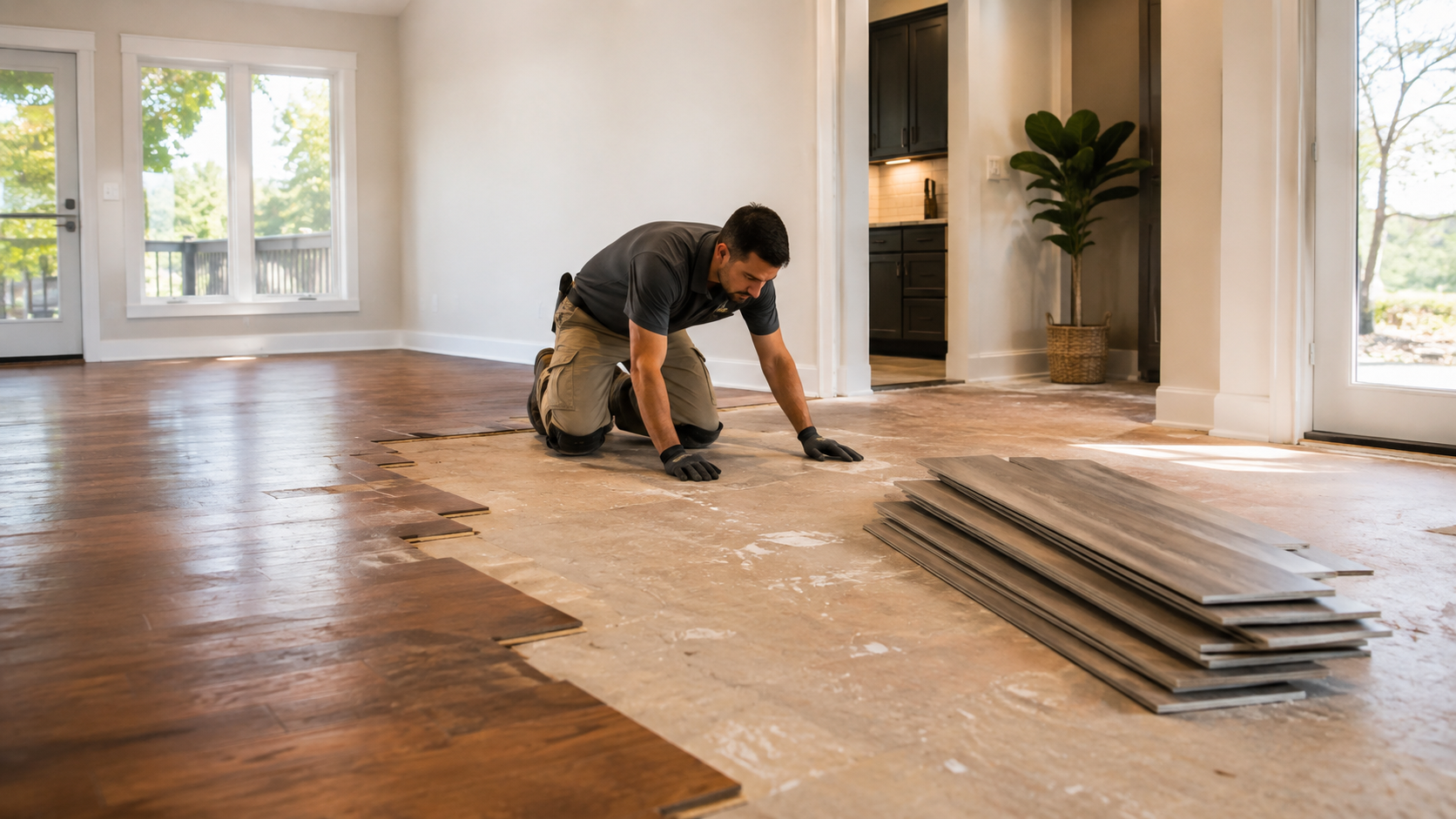
You have picked out the new flooring and are ready to begin. Then one question slows everything down: does the old floor actually need to come out?
Sometimes new flooring can be installed over an existing surface. In many homes, however, removal is the better way to protect the new floor and avoid problems with height, movement, moisture, or hidden damage. The correct answer depends on what is installed, the condition underneath it, and the requirements of the new product.
When Can New Flooring Go Over an Existing Floor?
An overlay may work when the existing floor is firmly attached, clean, dry, flat, and compatible with the new material. It cannot have loose sections, major cracks, soft spots, excessive texture, or moisture problems.
Some floating products, including certain luxury vinyl plank and laminate systems, may be installed over smooth sheet vinyl or another hard surface when the manufacturer allows it. The installer still needs to check flatness, transitions, door clearance, and the substrate.
The key word is “may.” A floor that looks fine can still have loose adhesive, damaged underlayment, or uneven areas that affect the finished installation.
When Does the Old Flooring Need to Be Removed?
Removal is usually the safer choice when:
- The existing floor is loose, cracked, buckled, soft, or water-damaged.
- Tile or grout is broken and movement may be occurring underneath.
- Carpet or another cushioned material is below the new flooring.
- The surface is uneven or already has multiple flooring layers.
- Added height would interfere with doors, appliances, cabinets, or transitions.
- The manufacturer requires installation over an approved subfloor.
- Moisture, damaged wood, or another hidden condition needs attention.
Installing over a failed floor does not fix the failure. It simply covers it until the same movement or moisture begins affecting the new material.
Why Floor Height Matters
Every layer changes the finished floor height. Even a thin product can create problems where rooms meet, at exterior doors, beneath dishwashers, or around stair landings. Baseboards and door casings may also need adjustment.
Uneven transitions can become tripping points and make the project look patched together. Removing the old floor often allows the new surface to meet neighboring rooms more cleanly.
In kitchens, appliance clearances should be checked before another layer is added. Trapping a dishwasher beneath a higher finished floor can make future service or replacement difficult.
What Could Be Hidden Under the Existing Floor?
Removing old flooring gives the installer a clear view of the subfloor or concrete slab. That is when cracks, moisture staining, loose panels, old adhesive, low areas, and damaged underlayment become visible.
These conditions do not always require major repairs, but they should be addressed before the new material goes down. A flat, stable surface helps locking systems stay engaged, prevents flexible or hollow areas, and supports a cleaner finished appearance.
Concrete may require adhesive removal, grinding, patching, or leveling. Wood-framed floors may have loose panels, squeaks, damaged sections, or raised fasteners that need attention.
Can You Install LVP Over Tile?
Sometimes—but only when the tile is secure, sufficiently flat, and permitted by the LVP manufacturer. Deep grout joints, cracked tiles, loose sections, or major height differences can prevent a successful overlay.
The tile may require patching or leveling so grout lines do not telegraph through the new flooring. Door and appliance clearance must also be checked. If the tile is failing or the added height creates complications, professional tile removal and slab preparation are usually the better path.
Should Hardwood Be Removed Before New Flooring?
A stable wood floor may sometimes serve as a suitable base for a floating system, subject to product instructions and moisture conditions.
Damaged, loose, heavily cupped, or glue-down hardwood may need removal. Taking it out also makes sense when you want consistent floor height across connected rooms or the slab or subfloor needs inspection.
Glue-down hardwood removal can be demanding because both the boards and remaining adhesive must be removed without unnecessarily damaging the surface below.
What About Carpet and Sheet Vinyl?
Carpet and padding normally need to be removed before hard-surface flooring is installed. They are too soft and unstable to provide the firm base most plank, wood, or tile systems require. Tack strips, staples, and debris also need to be cleared.
Sheet vinyl is more situation-dependent. A single, well-bonded, smooth layer may occasionally remain beneath an approved floating product. Loose, cushioned, damaged, or layered vinyl should generally come out. Older flooring or adhesive may also require special evaluation before it is disturbed.
Does Removing the Floor Create a Lot of Dust?
Floor removal is construction work, so some dust is possible—especially with tile, mortar, adhesive, and concrete preparation. Professional crews use removal equipment, dust-control methods, containment, debris handling, and cleanup procedures to limit the mess.
OP Remodel’s process includes removal of tile, hardwood, carpet, vinyl, and glue-down flooring, along with debris haul-off, adhesive removal, and concrete preparation. The goal is to leave a clean surface ready for the next phase.
Follow the Flooring Manufacturer’s Requirements
Installation instructions specify acceptable substrates, flatness tolerances, moisture conditions, underlayment, and preparation procedures. Ignoring them can lead to movement, separated joints, cracked tile, visible imperfections, or warranty problems.
The installer should evaluate both the old floor and the selected new material. A method that works for floating LVP may not be appropriate for tile or glue-down hardwood.
The Best Answer Starts With an On-Site Assessment
You do not need to guess whether removal is necessary. A flooring professional can inspect the existing material, check its condition and height, identify preparation needs, and compare those findings with the new product’s requirements.
OP Remodel handles floor removal, surface preparation, and new flooring installation across Sacramento, Placer, and El Dorado counties. Explore Floor Removal Services or LVP Flooring Installation to learn how the process works. Book a Free Flooring Assessment for a project-specific recommendation and written estimate.